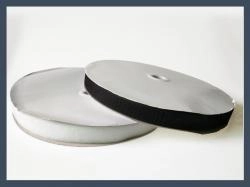
Detailed description
The specification sheet for this item is short, which is exactly why it gets mis-bought. Two suppliers can both call a roll nylon hook and loop and still ship different yarn counts, different hook densities and a different put-up.
What the buyer is choosing
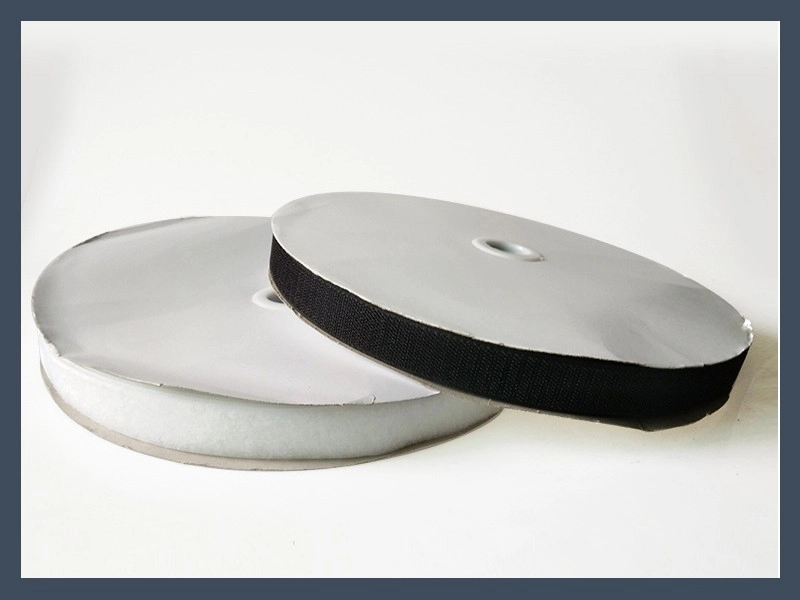
Two things decide whether a roll suits an automated line: the width tolerance at the core and the outside of the roll, and whether the put-up is splice-free. Ask for both in writing. A supplier who quotes a tolerance only for the finished carton is quoting the wrong measurement.
The material question
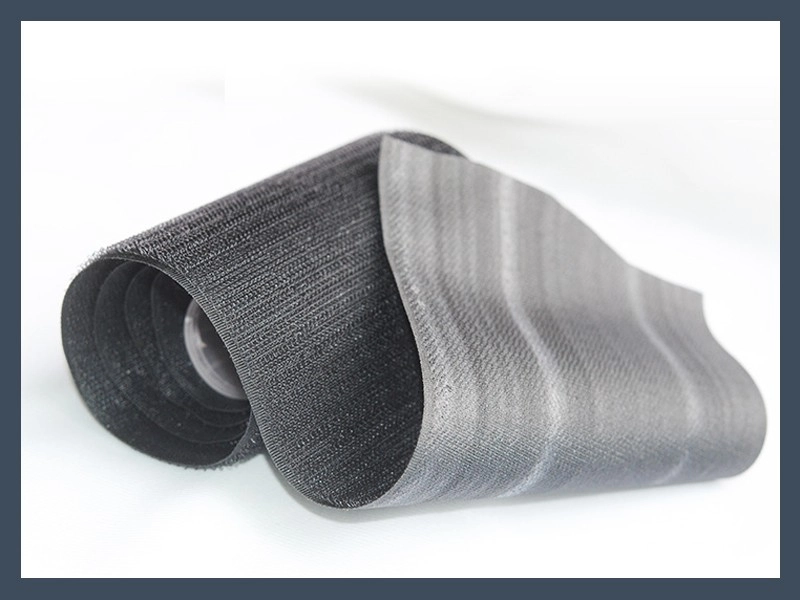
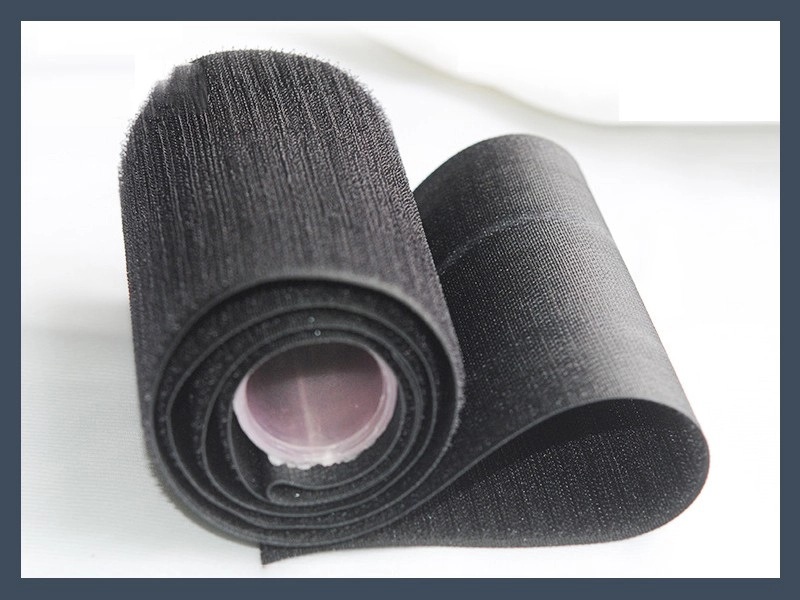
The construction is a woven hook and loop face in the standard grade: enough hook density for a normal closure, priced for volume rather than for a five-year service life. If the application cycles more than a few thousand times, ask for the higher-density weave instead of paying twice for the same part.
How it is quoted
Widths are slit from the master roll in one millimetre steps between 10 mm and 150 mm, held to plus or minus 0.5 mm. A width that is not on the list is a slitting instruction, not a new tool, so it does not add lead time once the master exists.
What ships with the goods
Colour is checked against the retained standard under D65 on every lot, and weft skew, oil marks and hook damage are inspected across the full roll rather than on a cut sample.
Checking it on arrival
Check the colour in the light the product is sold under. Warehouse fluorescent and daylight will disagree on dark greens and navies, and a lot rejected in one light is often accepted in the other. If it matters, agree the viewing condition before the order, not after.
If the grade is still open, send the application and the cycle count and we will tell you which of the three constructions is the cheapest one that will survive it.