Detailed description
If the last shipment had edges fraying, a width that measured wide on arrival, or a peel that read low in incoming inspection, the cause is almost always in one of the four items described on this page rather than in the price.
What the buyer is choosing
Two things decide whether a roll suits an automated line: the width tolerance at the core and the outside of the roll, and whether the put-up is splice-free. Ask for both in writing. A supplier who quotes a tolerance only for the finished carton is quoting the wrong measurement.
The material question
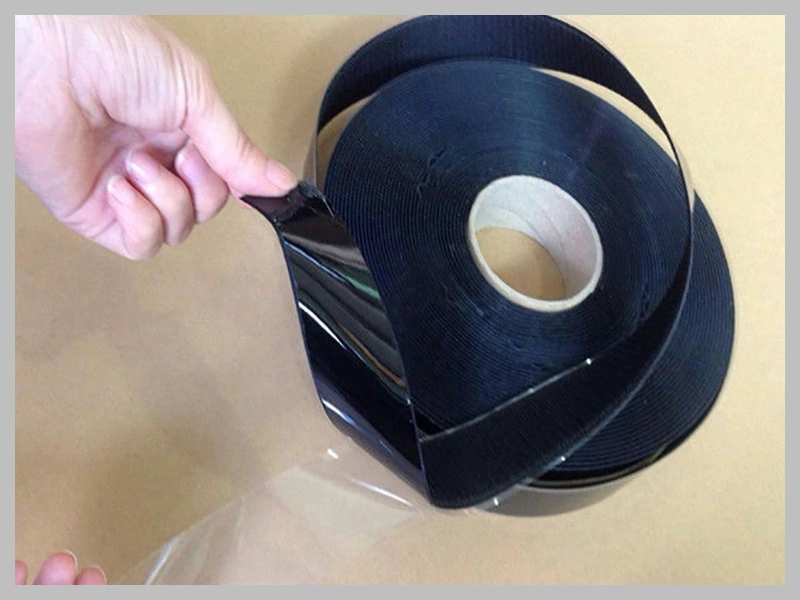
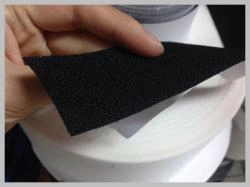
The construction is a woven hook and loop face in the standard grade: enough hook density for a normal closure, priced for volume rather than for a five-year service life. If the application cycles more than a few thousand times, ask for the higher-density weave instead of paying twice for the same part.
The adhesive version is coated with acrylic rather than hot melt, which is what keeps the bond from creeping when the panel sits in a warm vehicle or behind glass. Full strength takes twenty-four hours at room temperature.
How it is quoted
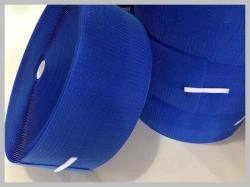
Minimum order is 500 m in a stock colour and 3,000 m for a custom dye run. The dye minimum is a machine load, not a policy: below it the lot cannot be dyed evenly, and a split lot reads as two colours under D65.
What ships with the goods
Colour is checked against the retained standard under D65 on every lot, and weft skew, oil marks and hook damage are inspected across the full roll rather than on a cut sample.
Checking it on arrival
Do the peel test on the material you will actually bond to, not on a steel plate. The number in the specification is a reference value measured on steel; on powder coat or on a textile it will read differently, and that difference is the one your customer will notice.
If you are comparing suppliers, send the other quotes with the specifications attached and we will tell you which line item is the one that will move on the invoice.