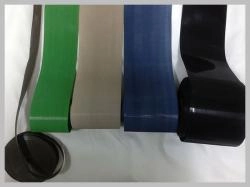
Detailed description
This is a woven hook and loop construction supplied to order. What follows is the part that decides whether the roll works on your line: the yarn, the width tolerance, the put-up and the paperwork that travels with the container.
What the buyer is choosing
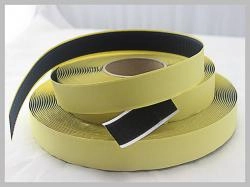
Grade and backing are separate decisions. The same woven face is supplied plain for stitching, coated with acrylic for panels, or coated with rubber for rough and low-energy surfaces. Buying the face and the backing as one item is what produces the 'it stuck for a week then fell off' complaint.
The material question
This is a nylon-polyester blend rather than a single fibre. The nylon share carries the cycle life and the colour depth; the polyester share carries dimensional stability and the price. Blends are quoted by ratio, so if the ratio is not stated, the two quotes you are comparing are not for the same product.
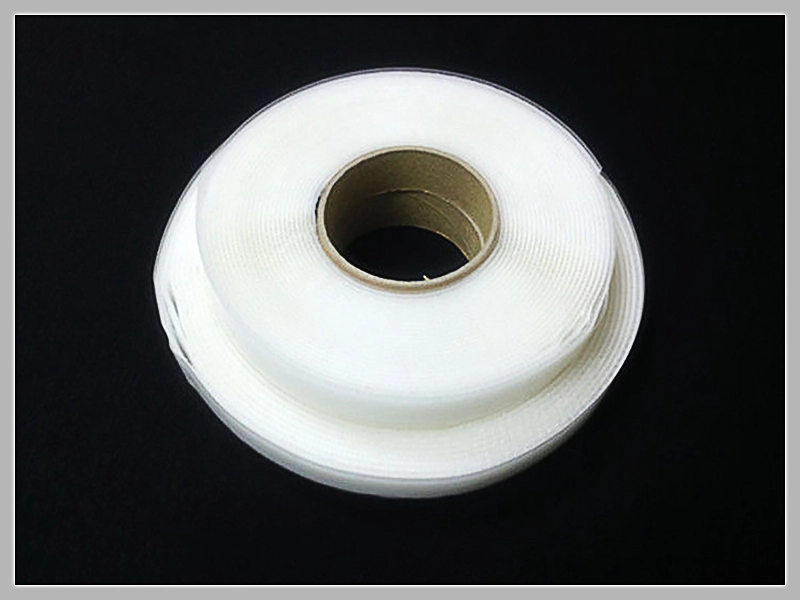
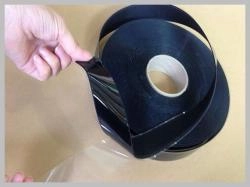
With the liner-backed version, position the part before exposing the adhesive and roll it down with firm pressure. A peel test run twenty minutes after application reads low by design and should not be used to reject a lot.
How it is quoted
Quotations are built from construction, width and colour, in that order. Change any one of the three and the price moves, which is why we ask for all three before quoting instead of sending a range and adjusting afterwards.
What ships with the goods
Certificates are issued per lot rather than per year, and REACH and RoHS declarations travel with the shipping documents. OEKO-TEX documentation is available on request for skin-contact applications.
Checking it on arrival
Open one carton from the middle of the pallet, not the top. Condensation and compression both show up in the middle of a stack, and the top carton is the one that was packed with the most care.
Ask for a sample at your width; it ships in seven days and it settles the substrate, colour and hand questions faster than any specification sheet.