Detailed description
There is no single grade of hook and loop, only grades matched to a job. The material, the width and the put-up below are the three variables worth settling before the first order, because changing any of them later re-opens the price.
What the buyer is choosing
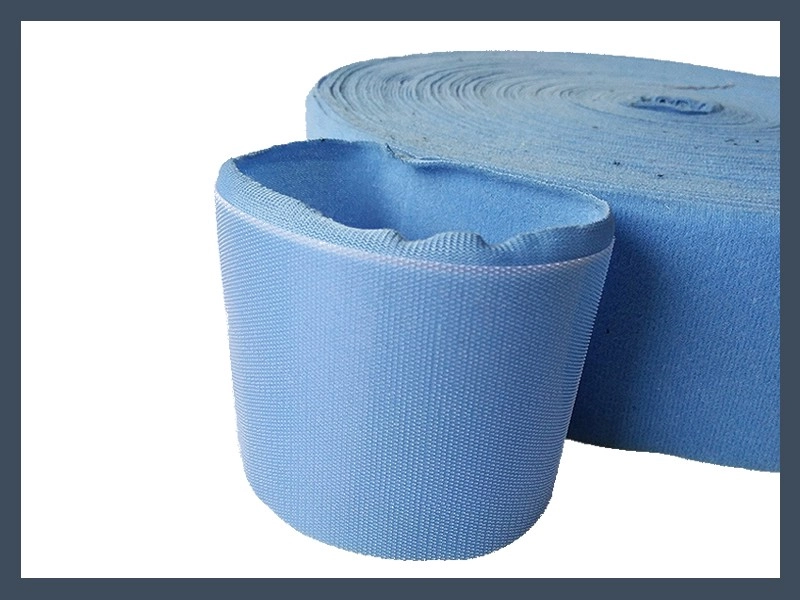
The mistake in comparing quotes is looking at the width and the colour and ignoring the yarn. A 25 mm roll at 380 g/m2 and a 25 mm roll at 300 g/m2 look identical in a photograph and behave completely differently after five hundred cycles.
The material question
This is a nylon-polyester blend rather than a single fibre. The nylon share carries the cycle life and the colour depth; the polyester share carries dimensional stability and the price. Blends are quoted by ratio, so if the ratio is not stated, the two quotes you are comparing are not for the same product.
How it is quoted
Samples ship in seven days, cut to the width you ask for, with the lot report from the run they came from. Bulk runs fifteen to twenty-five days after sample approval, EXW Xiamen, FOB or CIF as you prefer.
What ships with the goods
Certificates are issued per lot rather than per year, and REACH and RoHS declarations travel with the shipping documents. OEKO-TEX documentation is available on request for skin-contact applications.
Checking it on arrival
Weigh a metre of the roll. Weight per metre is the fastest proxy for yarn density, and it is the number that shifts quietly when a supplier tries to hold a price through a yarn increase.
Send the grade, width and colour with the annual volume and the quote comes back against a real construction rather than a catalogue range.