Detailed description
A buyer comparing three quotes for the same nominal product is usually comparing three different constructions. This page sets out what is actually in the tape so the quotes can be read side by side.
What the buyer is choosing
The mistake in comparing quotes is looking at the width and the colour and ignoring the yarn. A 25 mm roll at 380 g/m2 and a 25 mm roll at 300 g/m2 look identical in a photograph and behave completely differently after five hundred cycles.
The material question
The construction is a woven hook and loop face in the standard grade: enough hook density for a normal closure, priced for volume rather than for a five-year service life. If the application cycles more than a few thousand times, ask for the higher-density weave instead of paying twice for the same part.
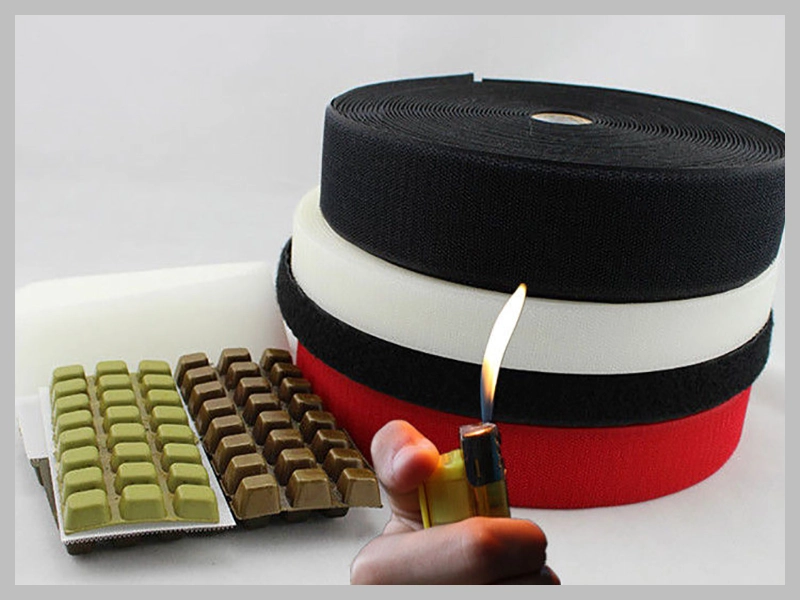
The flame-retardant claim is only worth what the report behind it says: standard, laboratory, lot number and result. Car interiors are tested to FMVSS 302, enclosures to UL94, and protective clothing to whatever standard the customer audits.
How it is quoted
Quotations are built from construction, width and colour, in that order. Change any one of the three and the price moves, which is why we ask for all three before quoting instead of sending a range and adjusting afterwards.
What ships with the goods
Certificates are issued per lot rather than per year, and REACH and RoHS declarations travel with the shipping documents. OEKO-TEX documentation is available on request for skin-contact applications.
Checking it on arrival
Open one carton from the middle of the pallet, not the top. Condensation and compression both show up in the middle of a stack, and the top carton is the one that was packed with the most care.
If you are comparing suppliers, send the other quotes with the specifications attached and we will tell you which line item is the one that will move on the invoice.