Detailed description
This is a woven hook and loop construction supplied to order. What follows is the part that decides whether the roll works on your line: the yarn, the width tolerance, the put-up and the paperwork that travels with the container.
What the buyer is choosing
Two things decide whether a roll suits an automated line: the width tolerance at the core and the outside of the roll, and whether the put-up is splice-free. Ask for both in writing. A supplier who quotes a tolerance only for the finished carton is quoting the wrong measurement.
The material question
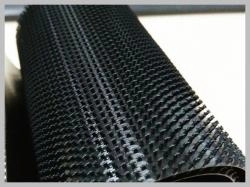
The construction is a woven hook and loop face in the standard grade: enough hook density for a normal closure, priced for volume rather than for a five-year service life. If the application cycles more than a few thousand times, ask for the higher-density weave instead of paying twice for the same part.
How it is quoted
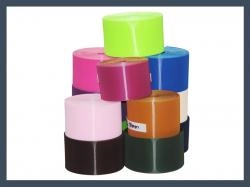
Minimum order is 500 m in a stock colour and 3,000 m for a custom dye run. The dye minimum is a machine load, not a policy: below it the lot cannot be dyed evenly, and a split lot reads as two colours under D65.
What ships with the goods
Packing is poly bag plus export carton, palletised for LCL. For humid destinations we add a desiccant and a moisture barrier, because a roll that takes up water in transit will measure wide on arrival.
Checking it on arrival
Weigh a metre of the roll. Weight per metre is the fastest proxy for yarn density, and it is the number that shifts quietly when a supplier tries to hold a price through a yarn increase.
If the grade is still open, send the application and the cycle count and we will tell you which of the three constructions is the cheapest one that will survive it.