Detailed description
There is no single grade of hook and loop, only grades matched to a job. The material, the width and the put-up below are the three variables worth settling before the first order, because changing any of them later re-opens the price.
What the buyer is choosing
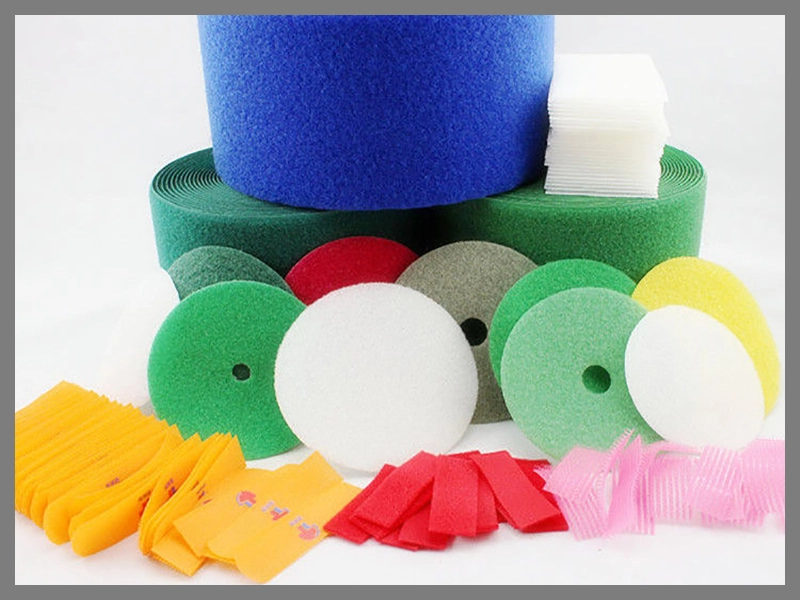
Colour is a specification, not a preference. Dyed lots are matched to a retained standard under D65 light, and a black that matches in an office can read green in daylight. If the colour is customer-facing, approve a physical swatch and keep it, because a photograph is not a standard.
The material question
The fibre is polyester. It takes up less water than nylon, so the width is stable in humid storage and in a container crossing the tropics, and it holds up under UV where nylon would chalk. The trade-off is a slightly stiffer hand and a narrower colour range at the deep end.
How it is quoted
Minimum order is 500 m in a stock colour and 3,000 m for a custom dye run. The dye minimum is a machine load, not a policy: below it the lot cannot be dyed evenly, and a split lot reads as two colours under D65.
What ships with the goods
Packing is poly bag plus export carton, palletised for LCL. For humid destinations we add a desiccant and a moisture barrier, because a roll that takes up water in transit will measure wide on arrival.
Checking it on arrival
Weigh a metre of the roll. Weight per metre is the fastest proxy for yarn density, and it is the number that shifts quietly when a supplier tries to hold a price through a yarn increase.
Send the grade, width and colour with the annual volume and the quote comes back against a real construction rather than a catalogue range.