Detailed description
There is no single grade of hook and loop, only grades matched to a job. The material, the width and the put-up below are the three variables worth settling before the first order, because changing any of them later re-opens the price.
What the buyer is choosing
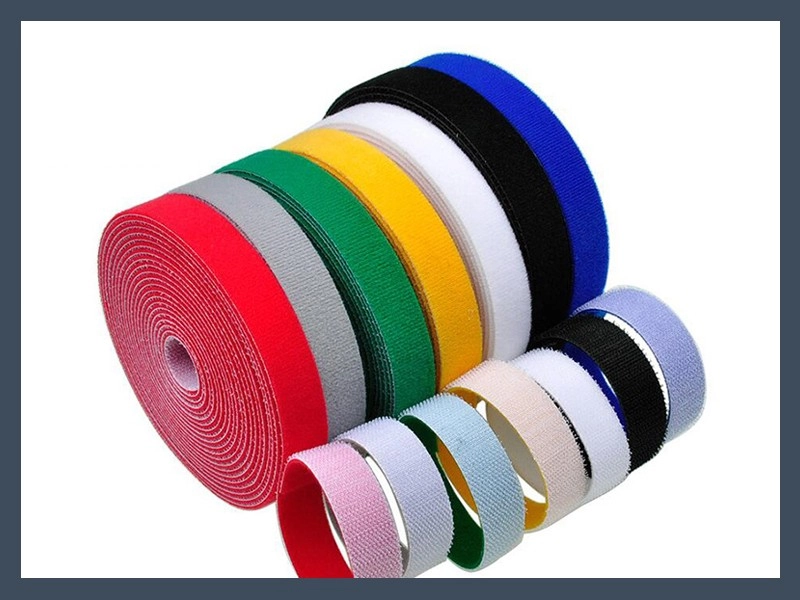
Colour is a specification, not a preference. Dyed lots are matched to a retained standard under D65 light, and a black that matches in an office can read green in daylight. If the colour is customer-facing, approve a physical swatch and keep it, because a photograph is not a standard.
The material question
This is a nylon-polyester blend rather than a single fibre. The nylon share carries the cycle life and the colour depth; the polyester share carries dimensional stability and the price. Blends are quoted by ratio, so if the ratio is not stated, the two quotes you are comparing are not for the same product.
How it is quoted
Payment is 30 percent deposit with the balance against a copy of the bill of lading. Mixed widths on one purchase order are quoted as separate lines with a shared lead time, which is usually cheaper than splitting the order.
What ships with the goods
Each carton is marked with the lot number, width, colour and quantity, and the lot report references the same number. That is what makes a claim traceable six months later instead of a conversation about photographs.
Checking it on arrival
On arrival, measure the width at the core and at the outside of the roll before you cut anything. A roll that measures wide at one end and nominal at the other was slit under uneven tension, and the whole lot will behave the same way on your line.
Ask for a sample at your width; it ships in seven days and it settles the substrate, colour and hand questions faster than any specification sheet.