Detailed description
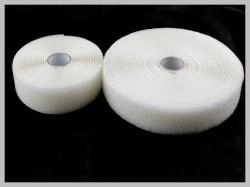
This is a woven hook and loop construction supplied to order. What follows is the part that decides whether the roll works on your line: the yarn, the width tolerance, the put-up and the paperwork that travels with the container.
What the buyer is choosing
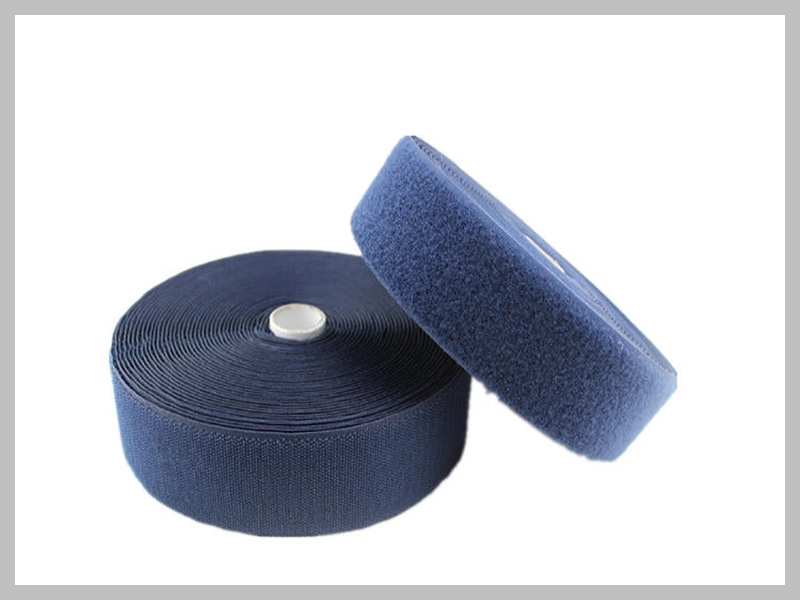
Colour is a specification, not a preference. Dyed lots are matched to a retained standard under D65 light, and a black that matches in an office can read green in daylight. If the colour is customer-facing, approve a physical swatch and keep it, because a photograph is not a standard.
The material question
The fibre is nylon (polyamide). It takes dye deeply, which is why the colour range is wide and why the colour holds through washing at 40 degrees. Its weakness is moisture regain: a nylon roll absorbs water in transit, measures wide on arrival and settles back over about a week, so allow for it in incoming inspection rather than rejecting the lot.
How it is quoted
Widths are slit from the master roll in one millimetre steps between 10 mm and 150 mm, held to plus or minus 0.5 mm. A width that is not on the list is a slitting instruction, not a new tool, so it does not add lead time once the master exists.
What ships with the goods
Colour is checked against the retained standard under D65 on every lot, and weft skew, oil marks and hook damage are inspected across the full roll rather than on a cut sample.
Checking it on arrival
Do the peel test on the material you will actually bond to, not on a steel plate. The number in the specification is a reference value measured on steel; on powder coat or on a textile it will read differently, and that difference is the one your customer will notice.
If the grade is still open, send the application and the cycle count and we will tell you which of the three constructions is the cheapest one that will survive it.